Tumastadir Forest
A national forest in the Fljotshlid valley of South Iceland, established in 1944 as a reforestation station. Tumastadir features an arboretum with dozens of tree species, easy walking trails through Sitka spruce woodland, and a picnic area beneath the historic Republic Grove.
Tumastadir Forest, known in Icelandic as Tumastadaskogur, is a national forest tucked into the Fljotshlid valley of South Iceland. Located about 9 kilometres east of the town of Hvolsvollur along Route 261, it sits at the foot of the mountains that line the northern edge of the south coast lowlands. In a country where less than 2 percent of the land is forested, Tumastadir stands as a quiet testament to decades of patient reforestation work.
History and the Republic Grove
The land at Tumastadir was completely treeless when the Icelandic Forest Service took it over in 1944 to use as a nursery and forestry station. That year also marked Iceland's declaration of independence from Denmark and the founding of the Icelandic Republic. To commemorate the occasion, foresters planted the first stand of Sitka spruce on the hillside and named it Lydveldislundurinn, the Republic Grove. These trees, now over 80 years old, form the historic heart of the forest and remain among the tallest and most impressive Sitka spruce in the country.
The Arboretum and Tree Species
One of Tumastadir's most interesting features is its arboretum, a collection of tree species from around the world planted to test their viability in Iceland's harsh climate. Alongside the dominant Sitka spruce, visitors will find a variety of native and foreign species carefully labelled and arranged. The arboretum functions as both a research site and a living museum of Arctic forestry. The variety of foliage creates a landscape that feels strikingly different from the open, treeless terrain that characterises most of Iceland.
Trails and Walking
Well-maintained paths wind through the forest, offering easy walks suitable for all fitness levels. The trails pass through dense spruce woodland, open grassy clearings, and the arboretum. A loop walk covers roughly 5 kilometres with gentle elevation changes, taking one to two hours at a comfortable pace. An extended route leads to viewpoints overlooking the surrounding valley and includes a small waterfall along the way. The paths are not formally colour-coded like those at larger forests such as Hallormsstadur, but they are clear and easy to follow.
Wildlife and Birdlife
The forest provides crucial habitat for bird species that depend on woodland cover, something that is scarce across most of Iceland. Redwings, one of the country's most common songbirds, nest readily among the trees. Redpolls feed on seeds in the birch and spruce, and wrens dart through the undergrowth. For birdwatchers, the relative quietness and density of the forest make it a rewarding stop compared to the open landscapes along the rest of the south coast.
Practical Information
Tumastadir is freely accessible with no entrance fee. A small parking area at the forest entrance includes picnic tables, making it a convenient place to stop for a break while driving the south coast. The forest lies within easy reach of several major attractions, including the Seljalandsfoss and Skogafoss waterfalls and the Thorsmork nature reserve. From Thorsmork, experienced hikers can walk to Tumastadir on a route of approximately 15 kilometres. For most visitors, however, the forest works best as a peaceful side trip from the Ring Road, offering a rare chance to walk among tall trees in a country where they are the exception rather than the rule.
Frequently Asked Questions
- How do I get to Tumastadir Forest?
- From the Ring Road, turn onto Route 261 towards Fljotshlid at Hvolsvollur. The forest is located about 9 kilometres east of Hvolsvollur along this road. Look for the signposted turn on the left. There is a free parking area at the entrance with picnic tables.
- When is the best time to visit?
- The forest can be visited year-round, but the best experience is from June to September when the trees are in full leaf and the trails are dry. In summer, the forest provides welcome shade on warm days, which is a rarity in Iceland. Winter visits are possible, though some paths may be muddy or snow-covered.
- How long does a visit take?
- A leisurely walk through the main trails and arboretum takes between one and two hours. If you extend your walk to the surrounding open areas and viewpoints, including a small waterfall nearby, allow up to three hours. The loop trail recorded on Wikiloc covers roughly 5 kilometres with moderate elevation.
- What makes Tumastadir historically significant?
- The Icelandic Forest Service established Tumastadir as a reforestation station and nursery in 1944, the same year Iceland declared independence and became a republic. The first stand of Sitka spruce planted that year was named Lydveldislundurinn, meaning Republic Grove, to mark the occasion. It was among the first large-scale Sitka spruce plantations in Iceland.
- Is Tumastadir suitable for families with children?
- Yes. The trails are flat to gently rolling, well maintained, and easy to follow. The forest provides a sheltered environment that is comfortable for children. The picnic area near the entrance makes it a good stop for a break during a south coast road trip.
Book Unforgettable Iceland Experiences — South Coast
From glacier hikes to northern lights tours — browse hundreds of activities and book with free cancellation.
Browse ActivitiesRent a Car and Explore Iceland
Freedom to roam the Ring Road and beyond. Compare car rental deals in Iceland.
Compare Car RentalsMore Attractions in South Coast
See all → South Coast30 minutes - 1 hour
Diamond Beach
A striking black volcanic sand beach where crystal-clear icebergs wash ashore from Jokulsarlon glacier lagoon, creating a natural display that resembles scattered diamonds. One of Iceland's most iconic photography locations and part of Vatnajokull National Park.
 South Coast15-30 minutes
Dverghamrar (Dwarf Crags)
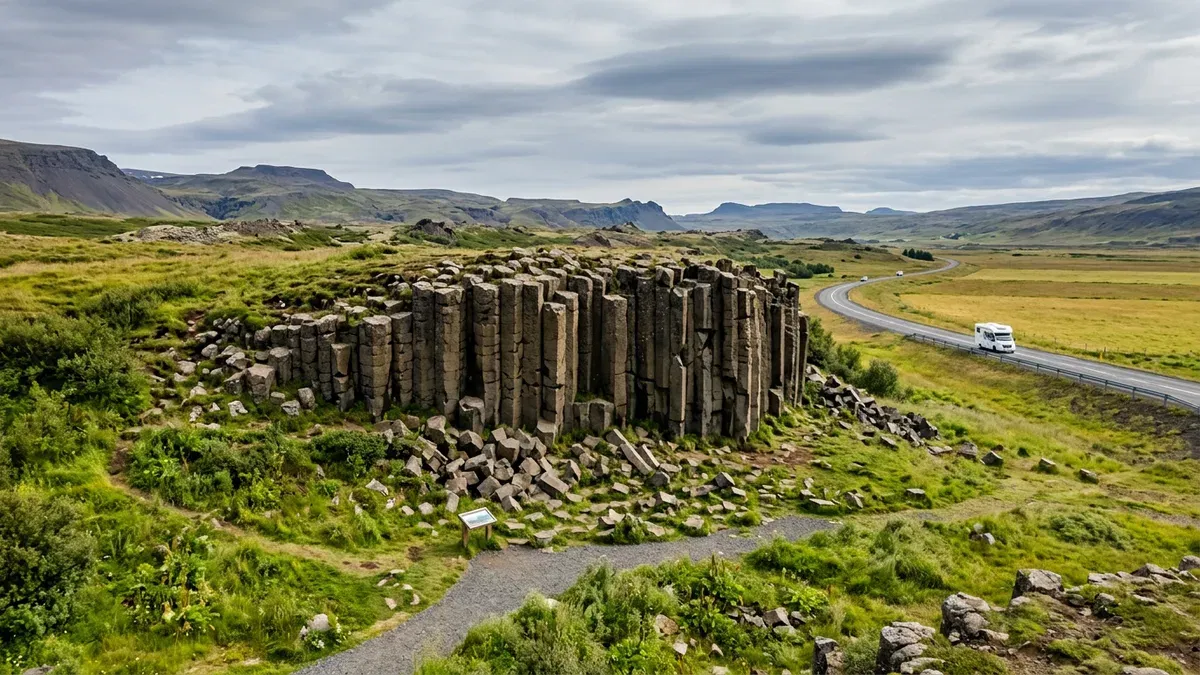
Dverghamrar is a cluster of small but perfectly formed basalt column formations along Route 1. These symmetrical hexagonal pillars, protected as a natural monument, look like they were crafted by the dwarves of Icelandic folklore.
 South Coast1-2 hours
Eldheimar
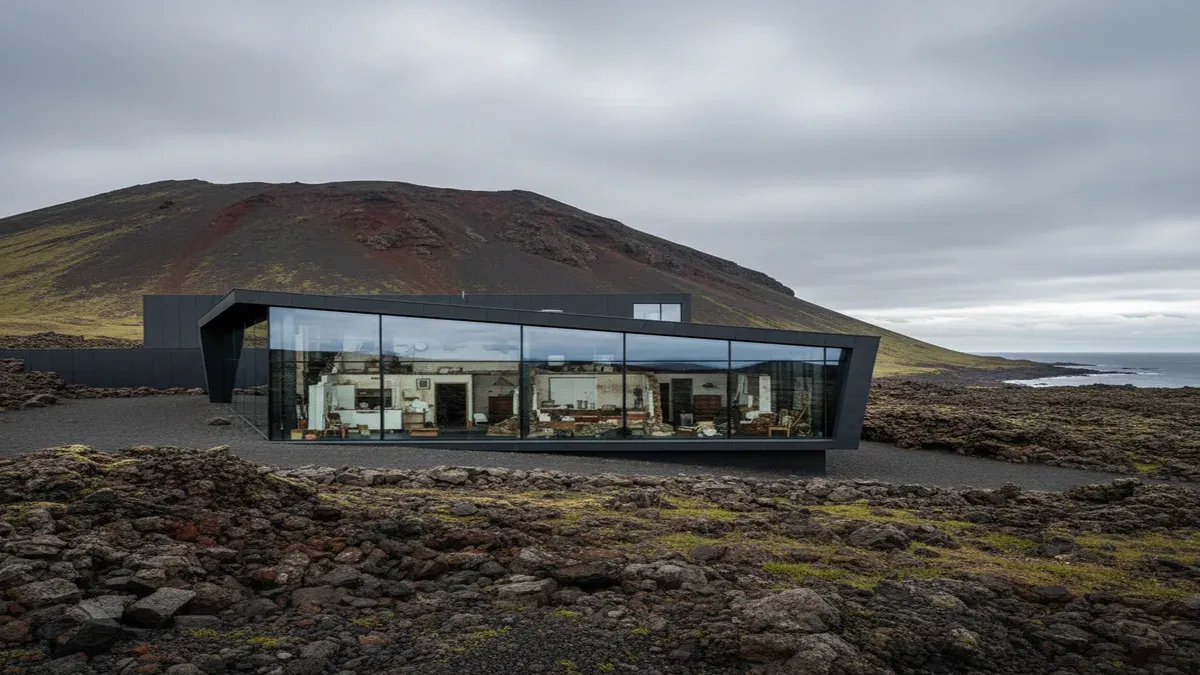
A striking museum built around an excavated house buried by tephra during the 1973 Eldfell eruption on Heimaey island. Often called the Pompeii of the North, Eldheimar preserves the moment an entire neighbourhood vanished beneath volcanic ash in a single night.