Dverghamrar (Dwarf Crags)
Dverghamrar is a cluster of small but perfectly formed basalt column formations along Route 1. These symmetrical hexagonal pillars, protected as a natural monument, look like they were crafted by the dwarves of Icelandic folklore.
Carved by Dwarves, Shaped by Geology
Dverghamrar — the Dwarf Crags — is one of those Icelandic sites where geology is so precise that folklore had to invent a better explanation. This small cluster of basalt columns along Route 1 features hexagonal pillars so regular and symmetrical that they look sculpted rather than natural. In the old stories, dwarves shaped them. In reality, the slow, even cooling of ancient lava created these geometric forms over thousands of years.
The formation is modest in size — nothing like the towering columns of Svartifoss or Reynisfjara. But what Dverghamrar lacks in scale, it compensates for in perfection. The columns are clean-cut, tightly packed, and arranged in formations that reveal the underlying physics of cooling lava with textbook clarity.
The Formation
The crags stand as a low cliff beside the road, perhaps five to six metres high. At the base, broken column sections have fallen away, creating a talus of hexagonal blocks that look like oversized building bricks. Higher up, intact columns stand vertically, their flat tops creating a natural pavement.
Walking around the formation, you can see different stages of the columnar jointing process. Some sections show broad, regular columns; others show thinner, more irregular ones where the cooling was uneven. Geologists use sites like this to study the relationship between cooling rate and column width.
Protected Monument
Dverghamrar has been a protected natural monument since 1984. The formation is fragile — the columns can crack and fall if climbed on — and the designation ensures that future visitors can enjoy the same clean, symmetrical shapes. Please stay on the ground and do not climb the columns.
Getting There
Dverghamrar is directly on Route 1, approximately 10 kilometres east of Foss á Síðu and about 280 kilometres from Reykjavik. A small gravel parking area sits right next to the formation. No hiking is required — you can see the crags from the car park and walk around them in a few minutes. It is a quick, worthwhile stop when driving the South Coast or Ring Road.
Frequently Asked Questions
- What are the Dwarf Crags?
- Dverghamrar is a small outcrop of columnar basalt — hexagonal rock pillars formed by the slow cooling of lava. The columns are unusually regular and symmetrical, creating a formation that looks almost man-made. In Icelandic folklore, the crags were said to be the work of dwarves.
- How long does a visit take?
- Most visitors spend 10 to 20 minutes at Dverghamrar. The formation is compact and can be seen from the small parking area. A short walk around the base takes just a few minutes.
- Is there a parking area?
- Yes, there is a small gravel parking area right next to the formation, directly off Route 1. The crags are visible from the car park.
- Is it worth stopping for?
- If you are driving the Ring Road between Kirkjubaejarklaustur and Hofn, it is a pleasant five-minute stop to stretch your legs and see a compact, well-formed example of Iceland's basalt geology. Do not make a special trip for it, but do not drive past either.
- How were the columns formed?
- When basalt lava cools slowly and evenly, it contracts and cracks into regular hexagonal columns. The slower the cooling, the more regular the columns. Dverghamrar is a particularly clean example of this geological process.
Book Unforgettable Iceland Experiences — South Coast
From glacier hikes to northern lights tours — browse hundreds of activities and book with free cancellation.
Browse ActivitiesRent a Car and Explore Iceland
Freedom to roam the Ring Road and beyond. Compare car rental deals in Iceland.
Compare Car RentalsMore Attractions in South Coast
See all →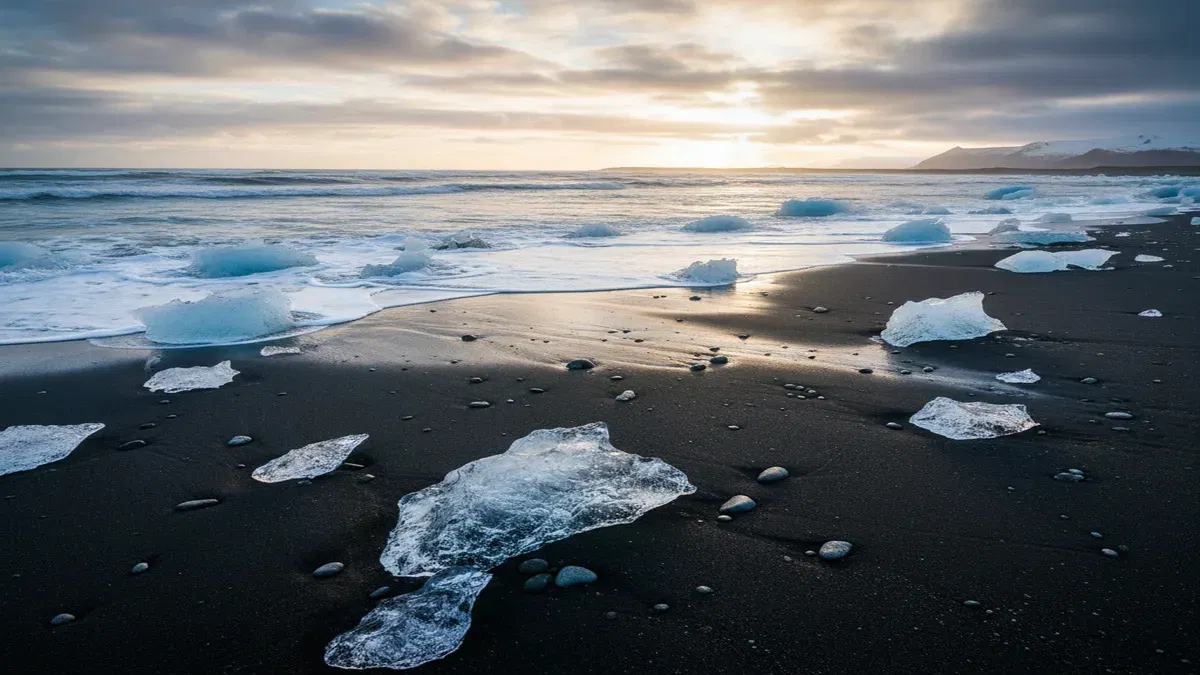 South Coast30 minutes - 1 hour
Diamond Beach
A striking black volcanic sand beach where crystal-clear icebergs wash ashore from Jokulsarlon glacier lagoon, creating a natural display that resembles scattered diamonds. One of Iceland's most iconic photography locations and part of Vatnajokull National Park.
 South Coast1-2 hours
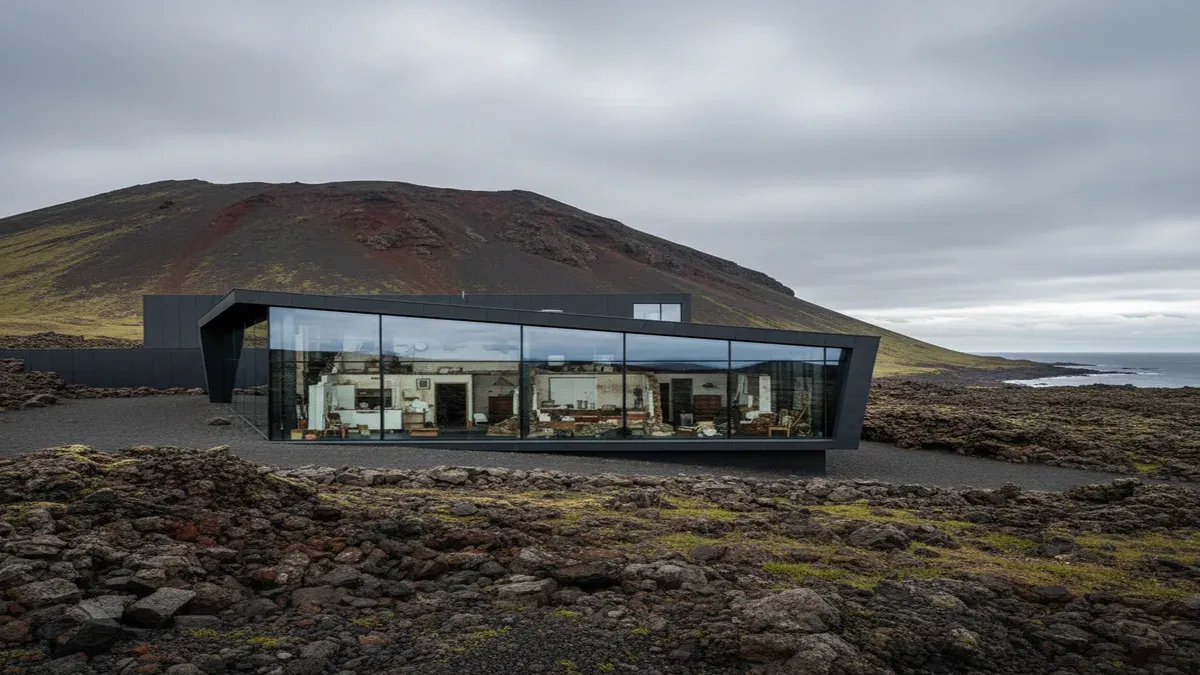
Eldheimar
A striking museum built around an excavated house buried by tephra during the 1973 Eldfell eruption on Heimaey island. Often called the Pompeii of the North, Eldheimar preserves the moment an entire neighbourhood vanished beneath volcanic ash in a single night.
 South Coast15-30 minutes
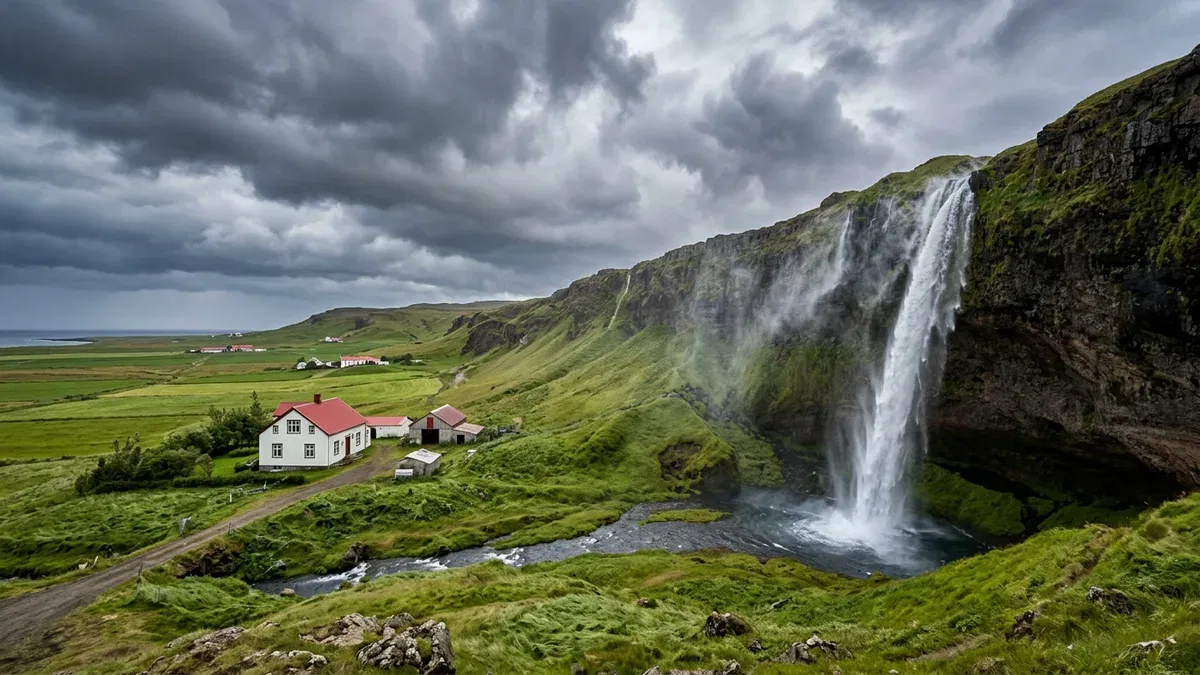
Foss á Síðu
Foss á Síðu is a graceful waterfall that drops from the edge of a cliff alongside a historic farm on Route 1. In strong winds, the water blows upward before it can reach the ground — a phenomenon that makes this roadside stop unforgettable.