Eldheimar
A striking museum built around an excavated house buried by tephra during the 1973 Eldfell eruption on Heimaey island. Often called the Pompeii of the North, Eldheimar preserves the moment an entire neighbourhood vanished beneath volcanic ash in a single night.
The 1973 Eruption
In the early hours of 23 January 1973, a volcanic fissure tore open on the eastern edge of Heimaey, the only inhabited island in the Vestmannaeyjar archipelago off Iceland's south coast. Without any warning, lava began shooting nearly 150 metres into the sky, and within hours the entire population of roughly 5,300 people was evacuated to the mainland by fishing boats. Over the following months, the eruption buried approximately 400 buildings under metres of ash and tephra, extended the island's landmass, and created the new volcanic cone now known as Eldfell. Remarkably, only one person lost their life, a testament to the speed and efficiency of the overnight evacuation.
The Excavated House
When archaeologists began digging into the buried neighbourhood in 2005, they found that beneath the thick layers of ash, time had effectively stopped. Tables were still set. Clothes lay folded by radiators. Personal belongings sat exactly where they had been left on the night the eruption began. The house at Gerdisbraut 10, which now forms the centrepiece of the museum, was meticulously uncovered over several years. Petrified cascades of ash still pour from its window frames, and through the glass you can see lampshades, curtains, and furniture frozen in place for over half a century.
The Museum
Eldheimar opened in May 2014, purpose-built around the excavated house ruin. The ground floor exhibition surrounds the house on all sides, using photography, film footage, personal accounts, and recovered artefacts to tell the story of the eruption and its aftermath. A large interactive wheel demonstrates how the lava flow spread across the town over the weeks and months of the eruption. Screens show interviews with survivors who recall the moment the fire engines sounded their horns to signal the evacuation.
The second floor shifts focus to the formation of Surtsey, the volcanic island that emerged from the sea just south of Heimaey in 1963, a decade before the Eldfell eruption. As a UNESCO World Heritage Site, Surtsey provides scientists with a unique opportunity to study how life colonises new land, and the exhibition covers this process in detail.
Visiting Eldheimar
The museum stands on the eastern outskirts of Heimaey town, directly beneath the dark slopes of Eldfell. A natural pairing is to visit the museum first to understand the eruption's history, then walk the 700 metres to the Eldfell trailhead and hike to the summit of the crater. The ascent takes roughly 20 to 30 minutes and offers panoramic views over the town, the harbour, and the surrounding ocean. In places, the ground near the top is still warm to the touch from residual geothermal heat.
The museum building includes a cafe on the upper level with views toward the mountains, and a small gift shop stocking books, maps, and locally made souvenirs. Audio guides are available in several languages at the reception desk, and these add considerable depth to the visit by providing detailed commentary at each exhibit station.
Frequently Asked Questions
- How do I get to Eldheimar Museum on the Westman Islands?
- The Westman Islands are reached by ferry from Landeyjahofn on the south coast, which takes approximately 35 minutes, or by a short domestic flight from Reykjavik. Once on Heimaey, the museum is within easy walking distance from the harbour, roughly 1.7 km south along the main road. No car is necessary to reach it on the island.
- What are the opening hours and do they change seasonally?
- During summer (approximately late April to late September), Eldheimar is open daily from 10:00 to 18:00. In winter (late September to late April), hours are reduced to 13:00 to 16:30 daily. It is worth checking the official website at eldheimar.is before visiting, as hours may vary around public holidays.
- How long should I allow for a visit to Eldheimar?
- Most visitors spend between 60 and 90 minutes in the museum. Allow closer to two hours if you want to watch the full documentary film, explore the Surtsey exhibition upstairs, and spend time in the cafe. The museum pairs well with a hike up Eldfell crater, which starts just 700 metres away.
- Is the museum suitable for children?
- Yes. Children under 10 enter free of charge, and the interactive exhibits, sand excavation display, and audio-visual presentations engage younger visitors well. The story of the eruption and evacuation is told in an accessible way that children typically find fascinating rather than frightening.
Book Unforgettable Iceland Experiences — South Coast
From glacier hikes to northern lights tours — browse hundreds of activities and book with free cancellation.
Browse ActivitiesRent a Car and Explore Iceland
Freedom to roam the Ring Road and beyond. Compare car rental deals in Iceland.
Compare Car RentalsMore Attractions in South Coast
See all →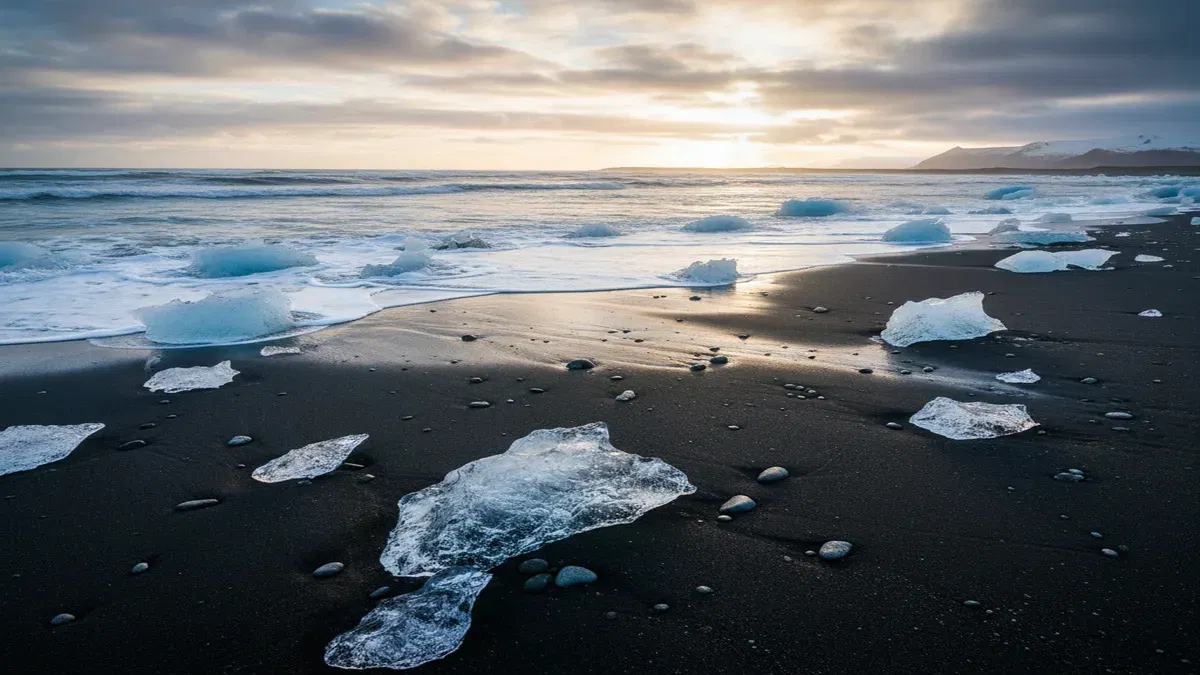 South Coast30 minutes - 1 hour
Diamond Beach
A striking black volcanic sand beach where crystal-clear icebergs wash ashore from Jokulsarlon glacier lagoon, creating a natural display that resembles scattered diamonds. One of Iceland's most iconic photography locations and part of Vatnajokull National Park.
 South Coast15-30 minutes
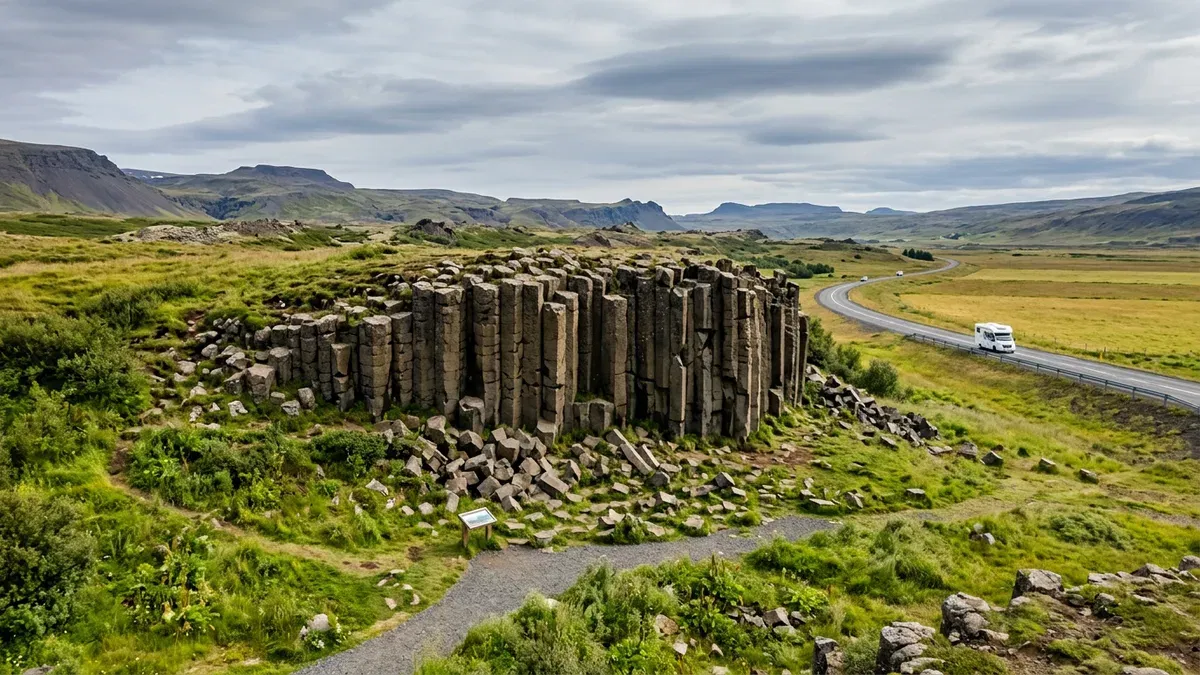
Dverghamrar (Dwarf Crags)
Dverghamrar is a cluster of small but perfectly formed basalt column formations along Route 1. These symmetrical hexagonal pillars, protected as a natural monument, look like they were crafted by the dwarves of Icelandic folklore.
 South Coast15-30 minutes
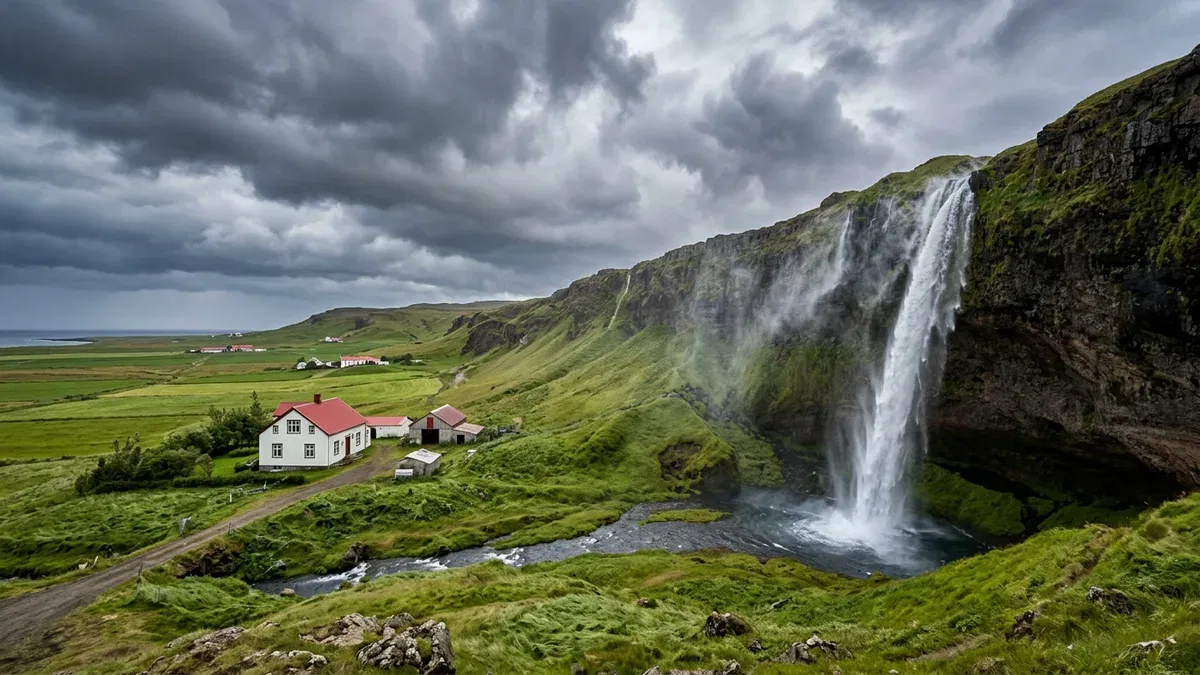
Foss á Síðu
Foss á Síðu is a graceful waterfall that drops from the edge of a cliff alongside a historic farm on Route 1. In strong winds, the water blows upward before it can reach the ground — a phenomenon that makes this roadside stop unforgettable.