Gullfoss
Gullfoss is one of Iceland's most iconic waterfalls — a massive two-tiered cascade where the Hvítá river plunges 32 metres into a narrow canyon. Part of the Golden Circle, it combines raw power with dramatic beauty and a compelling conservation story.
The Golden Falls
Gullfoss needs no introduction for most visitors to Iceland — it is the country's most famous waterfall and the centrepiece of the Golden Circle route. But familiarity does nothing to diminish the experience of standing beside it. The Hvítá river, thick with glacial sediment from Langjokull ice cap, tumbles over a broad ledge and then plunges into a 2.5-kilometre-long canyon with a force that you feel in your chest before you see it.
The waterfall drops in two stages. The upper cascade falls 11 metres over a wide, staircase-like rock ledge. The water then turns 90 degrees and drops another 21 metres into the narrow canyon below. From certain angles, the lower cascade appears to vanish into the earth — the canyon is so narrow and deep that the bottom is hidden from view.
The Upper Viewpoint
The most dramatic first impression comes from the upper viewing area, reached directly from the main car park. From here, you look down into the canyon and see both cascades and the enormous volume of water surging through the gap. The scale is difficult to grasp until you spot the tiny figures of visitors on the lower path, dwarfed by the falls.
On sunny days, rainbows arc through the spray, giving the waterfall its name — Gullfoss, the Golden Falls. The mist soaks everything and everyone within range, so a waterproof jacket is advisable even on a clear day.
The Lower Path
A path descends from the upper area to a viewpoint much closer to the edge of the upper cascade. From here, the noise is immense, the spray is constant, and the sheer volume of water passing before you is mesmerising. You are standing at the edge of raw geological power — the force that has carved this canyon over thousands of years is happening right in front of you.
In winter, this lower path is sometimes closed when ice makes it dangerous. The upper viewpoint remains accessible year-round.
The Woman Who Saved Gullfoss
In the early 20th century, foreign investors planned to harness Gullfoss for hydroelectric power. Sigridur Tomasdottir, the daughter of the farmer who owned the land, fought the plan for years, reportedly threatening to throw herself into the falls if the project went ahead. Her campaign, assisted by a young lawyer named Sveinn Bjornsson (who later became Iceland's first president), eventually succeeded. The waterfall remained untouched.
A memorial to Sigridur stands near the upper car park — a reminder that Iceland's natural landmarks have not always been guaranteed protection.
Getting There
Gullfoss is 118 kilometres from Reykjavik, approximately 1.5 hours by car via Route 35 through the Biskupstungur area. It is the final stop on the classic Golden Circle route, typically visited after Thingvellir National Park and the Geysir geothermal area. The visitor centre has a café serving soup, sandwiches, and coffee. There are toilets and a gift shop. The car park is large but can fill up during peak summer hours.
Frequently Asked Questions
- How big is Gullfoss?
- The waterfall drops in two stages — an 11-metre upper cascade and a 21-metre lower cascade — for a total of 32 metres. The Hvítá river carries an enormous volume of water, averaging 109 cubic metres per second in summer and up to 2,000 cubic metres per second in peak flow. It is one of the most powerful waterfalls in Europe.
- Is it free to visit?
- Yes, there is no entry fee for Gullfoss. There is a large parking area and a visitor centre with a café and gift shop. Parking is also free.
- Can I visit in winter?
- Yes, Gullfoss is accessible year-round. In winter, the surrounding landscape is covered in snow and ice, and parts of the waterfall may be partially frozen, creating a dramatic frozen spectacle. The paths can be icy — wear sturdy shoes with good grip.
- How close can I get?
- There are two main viewing areas. The upper platform looks down into the canyon from above. A lower path descends closer to the falls, bringing you near the edge of the upper cascade. Both are well maintained with paths and railings. In winter, the lower path may be closed due to ice.
- Why is it called the Golden Waterfall?
- Gullfoss means 'Golden Falls' in Icelandic. The name likely comes from the golden hue the water can take on when glacial sediment catches the sunlight, or from the rainbow that frequently appears in the spray on sunny days.
Book Unforgettable Iceland Experiences — Golden Circle
From glacier hikes to northern lights tours — browse hundreds of activities and book with free cancellation.
Browse ActivitiesRent a Car and Explore Iceland
Freedom to roam the Ring Road and beyond. Compare car rental deals in Iceland.
Compare Car RentalsMore Attractions in Golden Circle
See all →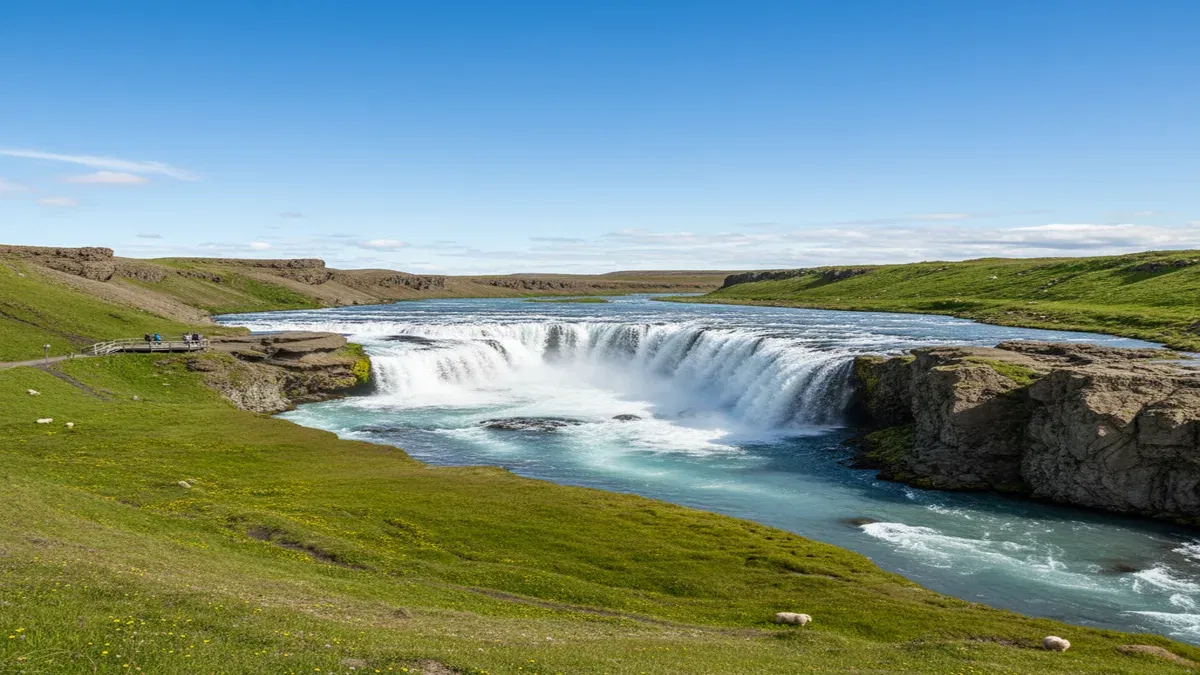 Golden Circle20-40 minutes
Faxi (Vatnsleysufoss)
A wide, gentle waterfall on the Tungufljot River, located just off the Golden Circle route. Faxi is 80 metres wide and 7 metres tall, known for its fish ladder, salmon fishing, and peaceful picnic area.
 Golden Circle1-2 hours
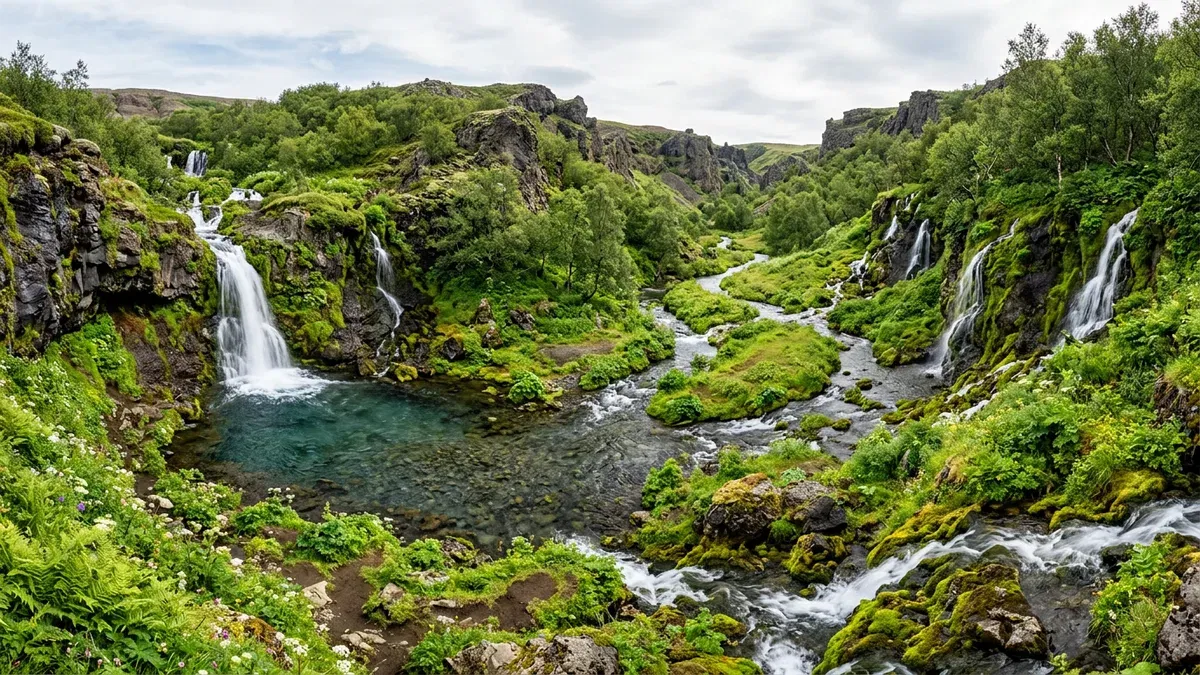
Gjáin
Gjáin is a hidden oasis in the Thjorsardalur valley — a sheltered ravine filled with small waterfalls, streams, and lush green vegetation. Often compared to a fairy-tale landscape, it remains one of South Iceland's best-kept secrets.
 Golden Circle30-45 minutes
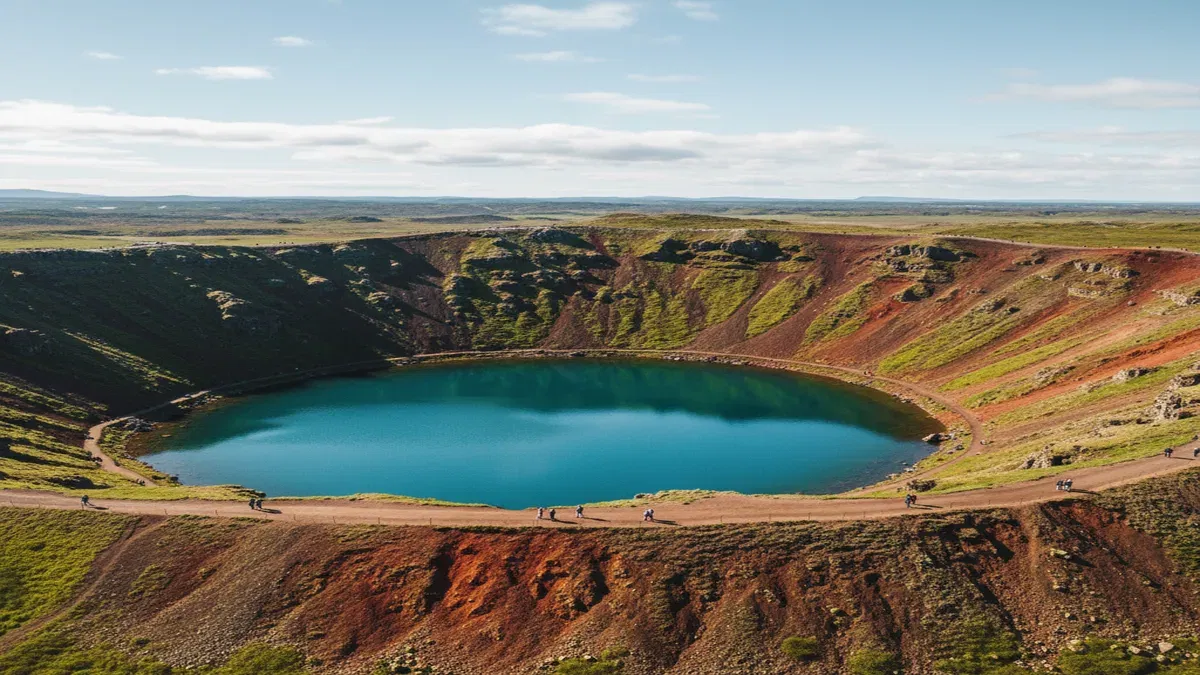
Kerid Crater
A striking volcanic crater lake on the Golden Circle route, where vivid red volcanic rock contrasts with milky turquoise water in a nearly perfect elliptical caldera.