Gatklettur
A natural stone arch carved from volcanic basalt by centuries of Atlantic wave erosion, located on the coastal path between Arnarstapi and Hellnar on the Snaefellsnes Peninsula.
Gatklettur — Icelandic for "hole rock" — is a natural stone arch on the southwestern coast of the Snaefellsnes Peninsula, formed where the Atlantic Ocean has spent centuries hammering away at the volcanic basalt cliffs. The result is a striking circular opening in the rock, framing the ocean beyond, that has become one of the most photographed spots on the peninsula.
The Arch
The arch was carved by wave action and wind erosion over hundreds of years. The basalt here was already fractured and layered from its volcanic origins, and the relentless force of the Atlantic gradually widened weak points in the rock until the sea broke through entirely. What remains is a freestanding arch with a circular opening and a second smaller window beside it, both shaped by the same erosive forces that continue to reshape this coastline today.
Geologists note that Gatklettur, like all sea arches, is a temporary formation. The same erosion that created it will eventually cause it to collapse, leaving behind a sea stack. For now, it stands as a particularly elegant example of what the Atlantic can sculpt from volcanic rock.
The Coastal Path
Gatklettur sits directly on the coastal walking path between the villages of Arnarstapi and Hellnar, a 5-kilometre trail that follows the cliff edge along one of the most dramatic stretches of coastline in western Iceland. The path passes lava formations, sea caves, blowholes, and nesting bird cliffs, with Gatklettur as its centrepiece.
From the Arnarstapi car park, the walk to Gatklettur takes roughly 10 to 15 minutes on a well-worn trail of gravel and packed earth. The terrain is mostly flat with some uneven rocky sections. Sturdy footwear is recommended but no special hiking equipment is needed.
Wildlife
The basalt cliffs surrounding Gatklettur are alive with seabirds during the breeding season from May through August. Fulmars nest in crevices along the cliff face, kittiwakes crowd onto narrow ledges, and arctic terns patrol the coastline overhead. Razorbills and shags also use the area, making this stretch of coast a reliable birdwatching spot without the crowds that gather at more famous colonies elsewhere in Iceland.
The birdlife is best observed from the path itself. Binoculars help, but many of the nesting sites are close enough to see clearly with the naked eye. Stay on the designated trail to avoid disturbing the colonies.
When to Visit
Summer offers the longest daylight, calmest weather, and active bird colonies. The arch photographs well in any light, but the low-angle sun of early morning or late evening produces the most dramatic results, particularly when the light passes directly through the circular opening.
Winter visits are possible but come with shorter days, stronger winds, and a more exposed experience. The cliffs and path can be icy, and the sea is rougher, which makes the power of the ocean more visceral but the footing less certain. Regardless of season, check the weather forecast before setting out — conditions on the Snaefellsnes coast can change quickly.
Frequently Asked Questions
- How do I get to Gatklettur?
- Drive to Arnarstapi on the southern coast of the Snaefellsnes Peninsula, approximately 200 kilometres from Reykjavik via Route 1 and Route 54. Park in the free car park in Arnarstapi and follow the coastal path west toward Hellnar. Gatklettur is roughly a 10 to 15 minute walk from the car park.
- Can I visit Gatklettur in winter?
- The area is open year-round, but winter conditions bring shorter daylight hours, strong winds, and potential ice on the coastal path. The rocks near the cliff edge can be slippery in wet or freezing conditions. Summer between June and August offers the best weather, longest daylight, and active seabird nesting.
- Is the path to Gatklettur suitable for children?
- The path is relatively flat and easy to walk, but there are no railings or barriers along the cliff edge. Children should be closely supervised at all times. Strong gusts of wind are common along this exposed coastline.
- What is the full Arnarstapi to Hellnar coastal walk?
- The coastal path between Arnarstapi and Hellnar is approximately 5 kilometres one way and takes 1.5 to 2.5 hours to complete. Gatklettur is one of several dramatic rock formations along the route. You can walk one way and return on the same path, or arrange transport back from either village.
- What birds can I see at Gatklettur?
- The cliffs around Gatklettur host nesting fulmars, kittiwakes, razorbills, and arctic terns, particularly during the breeding season from May through August. Stay on the marked path to avoid disturbing nesting birds.
Book Unforgettable Iceland Experiences — Snaefellsnes Peninsula
From glacier hikes to northern lights tours — browse hundreds of activities and book with free cancellation.
Browse ActivitiesRent a Car and Explore Iceland
Freedom to roam the Ring Road and beyond. Compare car rental deals in Iceland.
Compare Car RentalsMore Attractions in Snaefellsnes Peninsula
See all →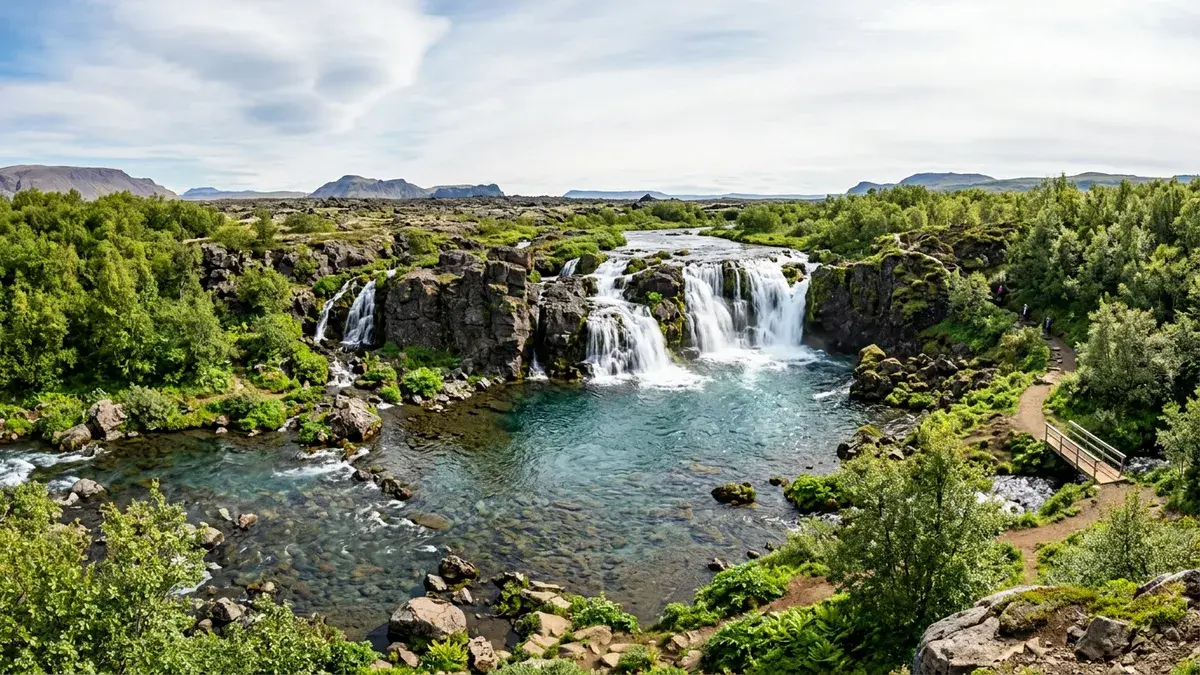 Snaefellsnes30-60 minutes
Glanni Waterfall
Glanni is a beautiful wide waterfall on the Norðurá river in West Iceland, surrounded by a dramatic lava landscape and birch woodland. Known as a prime Atlantic salmon fishing spot, the falls cascade over dark lava rock into a series of clear pools.
 Snaefellsnes1-1.5 hours
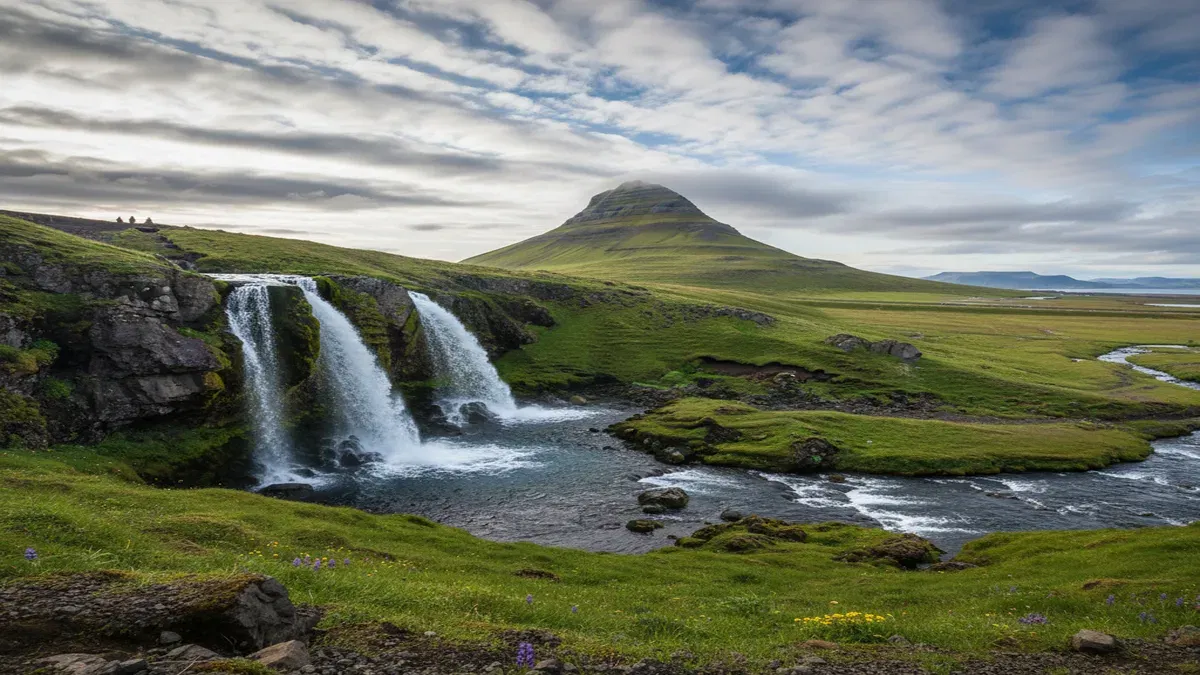
Grundarfoss
A powerful 70-metre waterfall near Grundarfjordur on the Snaefellsnes Peninsula, visible from the road yet surprisingly uncrowded. A short and easy hike leads to the base of one of the tallest waterfalls in western Iceland.
 Snaefellsnes15-30 minutes
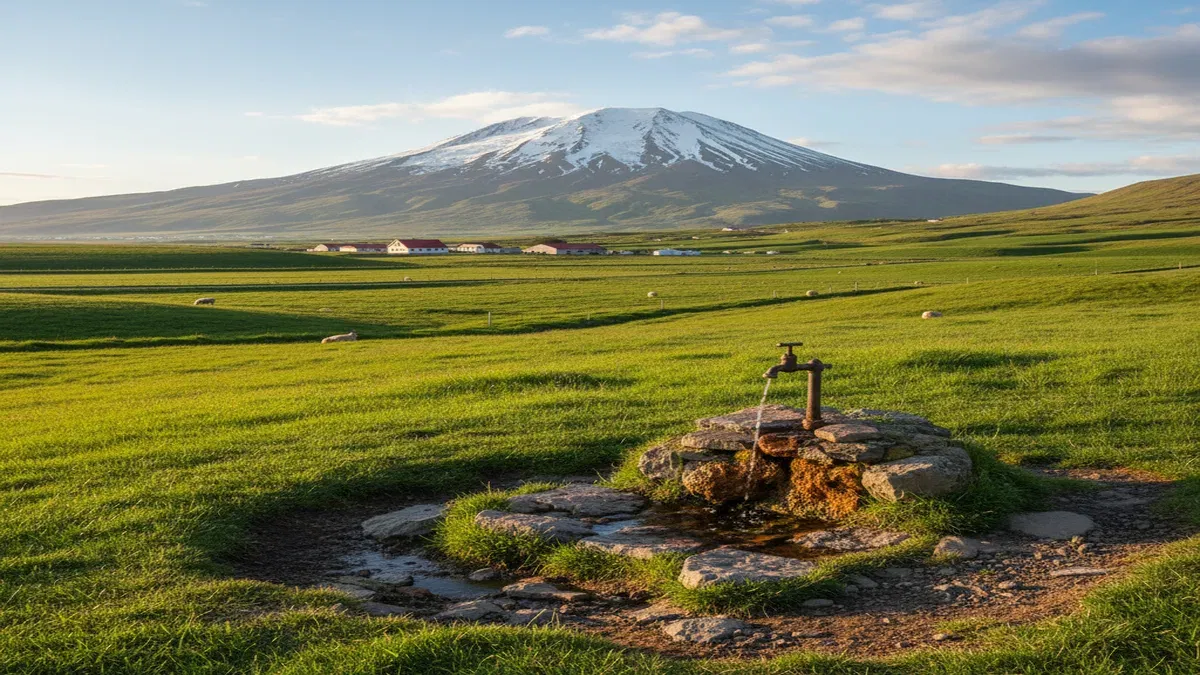
Olkelda Mineral Spring
A naturally carbonated mineral spring on the southern coast of the Snaefellsnes Peninsula, where iron-rich sparkling water bubbles up from the ground and visitors can drink directly from a tap for free.