Bridge Between Continents
A 15-meter footbridge spanning a rift between the North American and Eurasian tectonic plates on the Reykjanes Peninsula, offering a symbolic walk between two continents in the middle of a vast lava field.
Walking Between Two Continents
The Bridge Between Continents, officially named Leif the Lucky's Bridge, is a 15-meter steel footbridge that spans a deep fissure in the lava fields of the Reykjanes Peninsula in southwest Iceland. The fissure marks where the North American and Eurasian tectonic plates are slowly pulling apart along the Mid-Atlantic Ridge. Built in 2002 by the Icelandic Road and Coastal Administration, the bridge was designed to give visitors a tangible experience of standing on one of the most significant geological boundaries on Earth.
The site sits in the Sandvik area along Route 425, surrounded by rough, moss-speckled lava fields that stretch in every direction. This barren and windswept landscape is part of the Reykjanes UNESCO Global Geopark, a region recognized for its extraordinary concentration of volcanic features including craters, geothermal areas, and lava formations created by the exposed section of the Mid-Atlantic Ridge.
The Geology Beneath Your Feet
Iceland is one of the few places on Earth where the Mid-Atlantic Ridge rises above sea level. The ridge runs through the center of the country, and on the Reykjanes Peninsula its effects are especially visible. The tectonic plates beneath the bridge are moving apart at an average rate of about 2.5 centimeters per year, though this happens in sudden bursts of seismic activity rather than as a continuous drift. The fissure under the bridge is one of many tension cracks in the area, evidence of the immense geological forces that continue to shape the Icelandic landscape. Recent volcanic eruptions on the Reykjanes Peninsula since 2021 have underlined just how active this region remains.
Visiting the Bridge
The bridge is accessible year-round and open around the clock with no admission fee. A paved path leads from the parking area to the bridge, and information panels along the way explain the geological context. The walk across is brief but offers a memorable photo opportunity with the stark lava landscape as a backdrop. After crossing, visitors can collect a personalized certificate at the Reykjanes Geopark visitor center or the Folk Museum in Gardur, a popular souvenir that confirms the symbolic continental crossing.
A Natural Stop Near Keflavik
At just 23 kilometers from Keflavik International Airport, the Bridge Between Continents makes a practical first or last stop on an Iceland trip. It pairs well with other Reykjanes attractions including the Gunnuhver geothermal area, Hafnaberg sea cliffs, and the Reykjanesviti lighthouse, all within a short drive. The area is exposed and can be windy, so a windproof jacket is advisable even on otherwise calm days. Stick to marked paths around the bridge, as the lava terrain can be unstable with hidden sinkholes.
Frequently Asked Questions
- Is the Bridge Between Continents free to visit?
- Yes, there is no admission fee to walk across the bridge. It is open 24 hours a day, seven days a week. There is a small parking fee at the designated lot that contributes to site maintenance.
- What is the certificate and where do I get it?
- After crossing the bridge you can collect a personalized certificate confirming that you walked between two continents. Certificates are available at the Folk Museum in Gardur and at the Reykjanes Geopark visitor center at Duus Cultural House in Reykjanesbaer.
- How far is the bridge from Reykjavik and Keflavik Airport?
- The bridge is approximately 50 kilometers from Reykjavik, which takes about 40 minutes by car. From Keflavik International Airport it is roughly 23 kilometers, making it an easy stop on your way to or from the airport.
- Is the bridge actually on the tectonic plate boundary?
- The bridge spans a fissure created by the divergent movement of the North American and Eurasian tectonic plates along the Mid-Atlantic Ridge. The rift widens by approximately 2.5 centimeters per year. While the exact plate boundary is a broad zone rather than a single line, the fissure beneath the bridge is direct evidence of the ongoing separation.
- How long does a visit take?
- Most visitors spend 15 to 30 minutes at the site. Walking across the bridge itself takes only a minute or two, but the surrounding lava field and the information panels along the path are worth exploring at a relaxed pace.
Book Unforgettable Iceland Experiences — Reykjavik
From glacier hikes to northern lights tours — browse hundreds of activities and book with free cancellation.
Browse ActivitiesMore Attractions in Reykjavik
See all →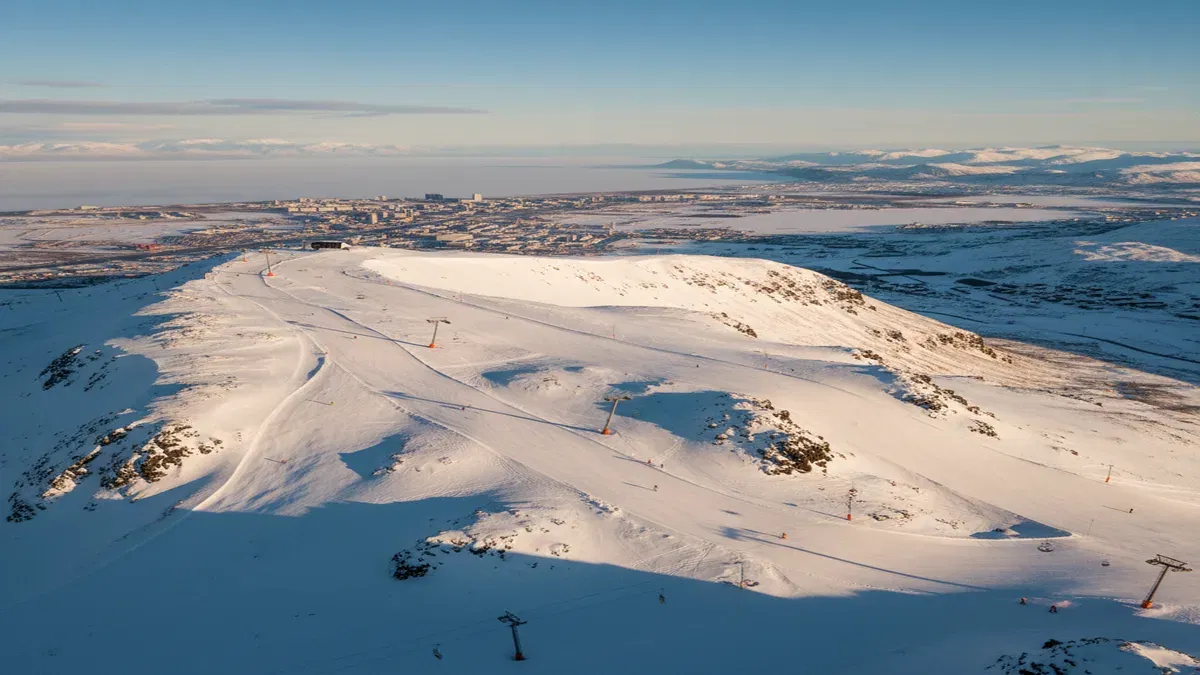 Reykjavik3-6 hours
Blafjoll Ski Resort
Iceland's largest ski resort, just 30 minutes south of Reykjavik in the Blue Mountains. Blafjoll offers 15 km of slopes, 14 lifts, night skiing under floodlights, and the chance to ski beneath the northern lights.
 Reykjavik45-60 minutes
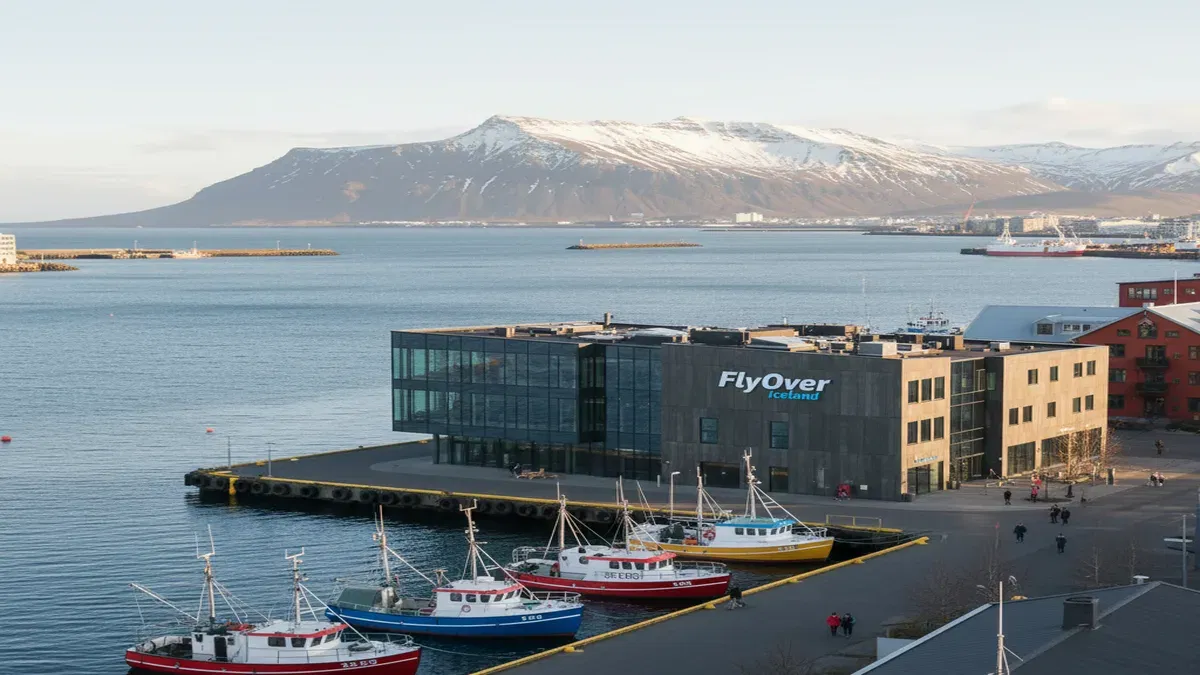
FlyOver Iceland
A state-of-the-art flying theatre in Reykjavik's Grandi harbour district where visitors are suspended before a 20-metre spherical screen for an immersive aerial journey across Iceland's landscapes, complete with wind, mist, and scent effects.
 Reykjavik30 minutes - 1 hour
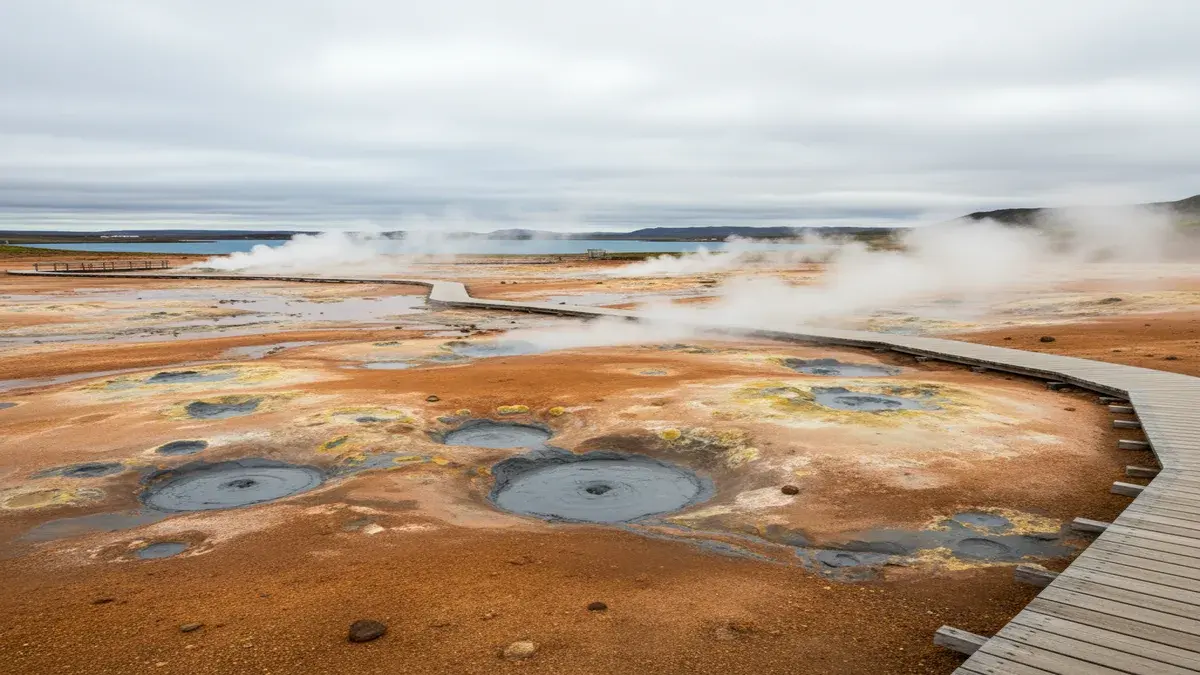
Krysuvik Geothermal Area
A vivid high-temperature geothermal field on the Reykjanes Peninsula where boardwalk trails wind past bubbling mud pots, hissing fumaroles, and hillsides stained in brilliant shades of yellow, red, and green by sulphur and mineral deposits. Free to visit and less than an hour from Reykjavik.